


Operating Mode
7×24-hour continuous operation

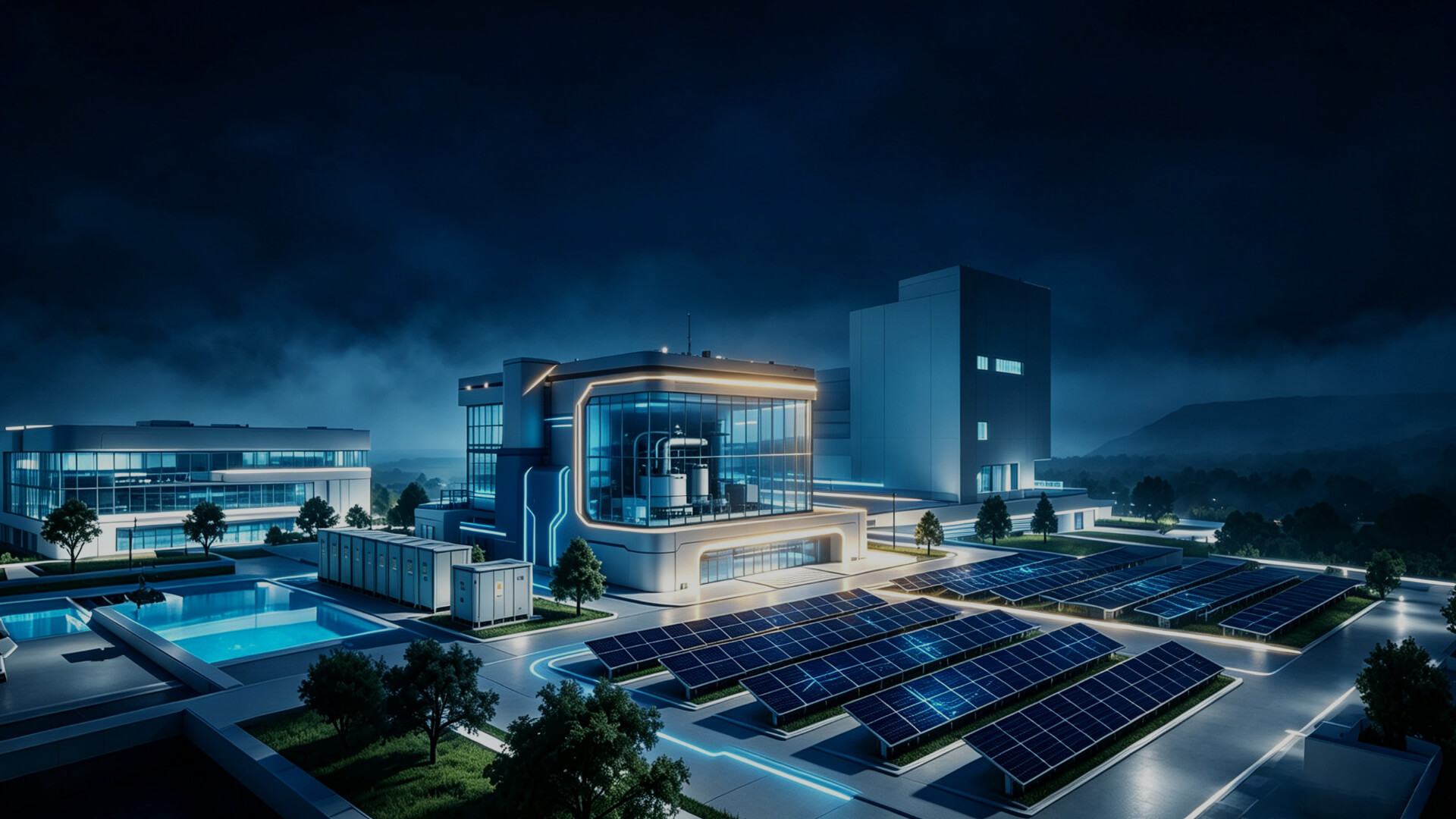
AIDC PV-Storage System Solution
Scenario Description and Typical Load Characteristics
AIDCs primarily support AI training, AI inference, and high-performance computing (HPC), serving as critical computing infrastructure in the AI era. With the rapid expansion of GPU server deployments, data centers are evolving toward ultra-high power consumption, high density, and round-the-clock continuous operation, placing higher demands on power supply reliability and energy efficiency.
AIDC loads are characterized by high stability, high continuity, and round-the-clock operation, providing a solid foundation for synergistic integration with PV and energy storage systems.

Operating Mode
7×24-hour continuous operation

Power Consumption Characteristics
High load factor, high stability, round-the-clock operation

Power Supply Requirements
Highly reliable power supply, zero downtime for mission-critical operations

power Needs
Increased share of green electricity, reduced operating costs
Trends in the Evolution of AIDC Power Supply Architectures
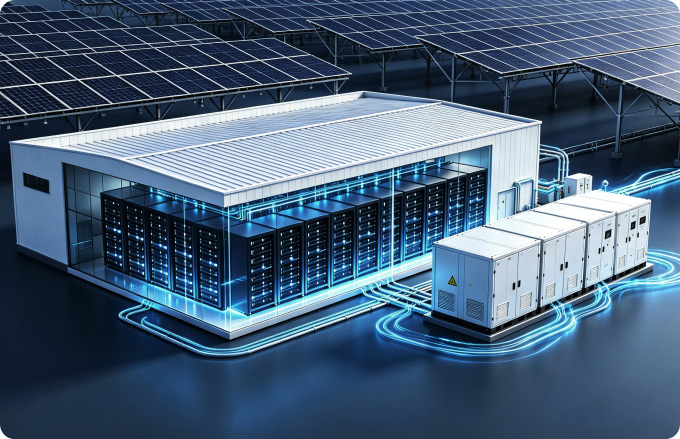
800V HVDC Drives Upgrades to AI Data Center Power Supply Architectures
As the power density of AI computing clusters continues to increase, traditional power supply architectures face challenges such as high power, high density, and rapid power fluctuations. NVIDIA is driving the evolution of next-generation AI data centers (AI Factories) toward an 800V HVDC (High-Voltage Direct Current) power supply architecture and is promoting the establishment of a corresponding integration and certification system for energy storage systems. Its core objective is to address the power supply bottlenecks—including high power, rapid fluctuations, and high density—caused by AI computing clusters through a “high-voltage direct current + energy storage” solution.
By increasing the supply voltage, 800V HVDC reduces the transmission current for the same power output, thereby minimizing line losses and alleviating pressure on the power distribution system, and supporting the construction of AI computing infrastructure with higher power density. At the same time, energy storage systems enhance the AI data center power supply system’s resilience to load fluctuations and grid anomalies through capabilities such as rapid power response, grid-forming operation, and coordinated on-grid and off-grid operation.

Rapid dynamic response
Tracking rapid power changes in AI loads, smoothing out power steps and transient fluctuations, and enhancing the dynamic stability of the power supply system.

Grid formation and islanded operation
Autonomously establish voltage and frequency during grid anomalies or when disconnected from the grid, supporting islanded operation and black start.

Grid support capability
Possess high- and low-voltage ride-through and reactive power support capabilities, enhancing the system’s adaptability to grid fluctuations.

Coordinated grid-connected and off-grid operation
Support smooth switching between grid-connected and off-grid operating modes, improving the overall resilience of the AIDC power supply system.
Energy Storage Becomes a Key Component of the 800V HVDC Architecture
In an 800V HVDC architecture, energy storage systems not only serve as backup power sources in the traditional sense but must also provide stronger dynamic power support and grid adaptability, including:
For high-power-density AI data centers, future energy storage systems will work in close coordination with 800V HVDC architectures to form a layered energy architecture combining “short-term dynamic support” and “long-term energy storage”: front-end rapid-response devices such as supercapacitors can suppress millisecond-level power fluctuations, while battery energy storage systems handle power balancing and backup power supply over longer time scales.
4Scenario Pain Points
Extremely high requirements for power supply continuity and dynamic stability
AI workloads run continuously and experience rapid power fluctuations; power outages or insufficient dynamic response can lead to interruptions in computing tasks and business losses.
Continually increasing electricity consumption and cost pressures
Continually increasing electricity consumption and cost pressures: The high-load operation of GPU clusters makes AI data centers (AIDCs) a typical high-power consumption scenario, with power supply capacity and energy costs becoming major constraints on infrastructure development.
Challenges in Grid Connection and Expansion Capacity
Challenges in Grid Connection and Expansion Capacity: With computing loads growing rapidly, some regions face issues such as insufficient grid capacity, lengthy expansion cycles, or inadequate grid stability.
Increasing Demand for Green Energy
Increasing Demand for Green Energy: The continuous expansion of AI infrastructure drives demand for renewable energy, prompting AIDCs to increase their use of green electricity to optimize their energy mix and achieve low-carbon operations.
AIDC PV-Storage System Solution
Overseas RTC 24/7 Green Power Supply Solution
(Weak Grid/Off-Grid Areas)
Domestic AIDC Backup Power Solution
(Strong Grid Area)
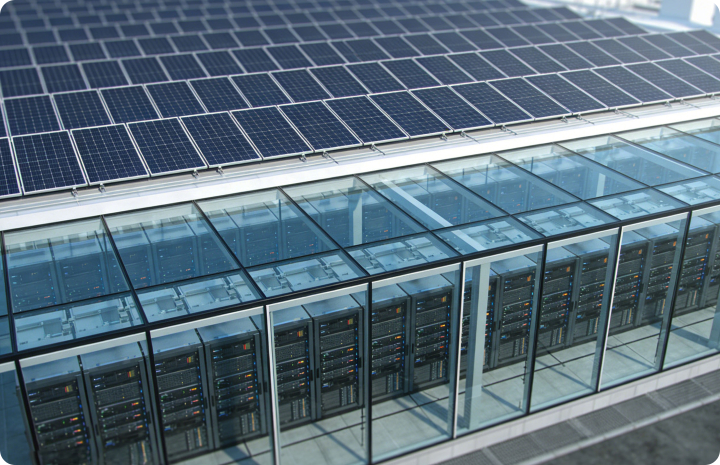
Taking a 1 GW AIDC continuous load as an example:
AIDC load
1GW
PV capacity
4.5GWp
BESS capacity
19GWh
Module
Tiger Neo 3.0
Storage
SunTera
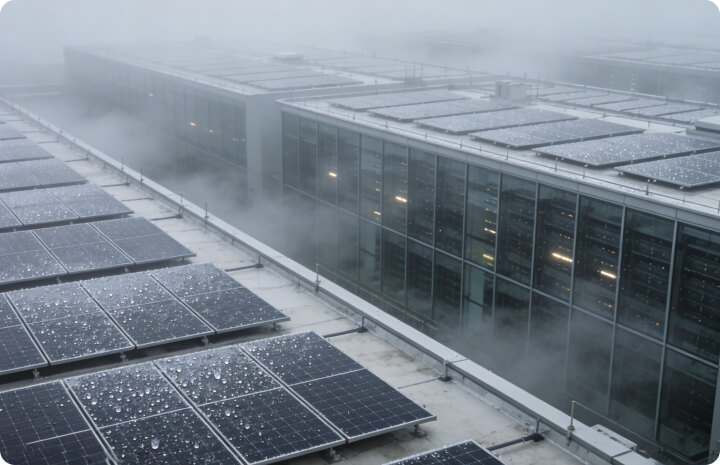
10MW Continuous Load Case
AIDC load
10MW
PV capacity
10MWp
BESS capacity
40MWh (4h emergency power backup)
Module
Tiger Neo 3.0
Storage
SunTera
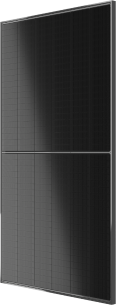
Tiger Neo 3.0 PV Module
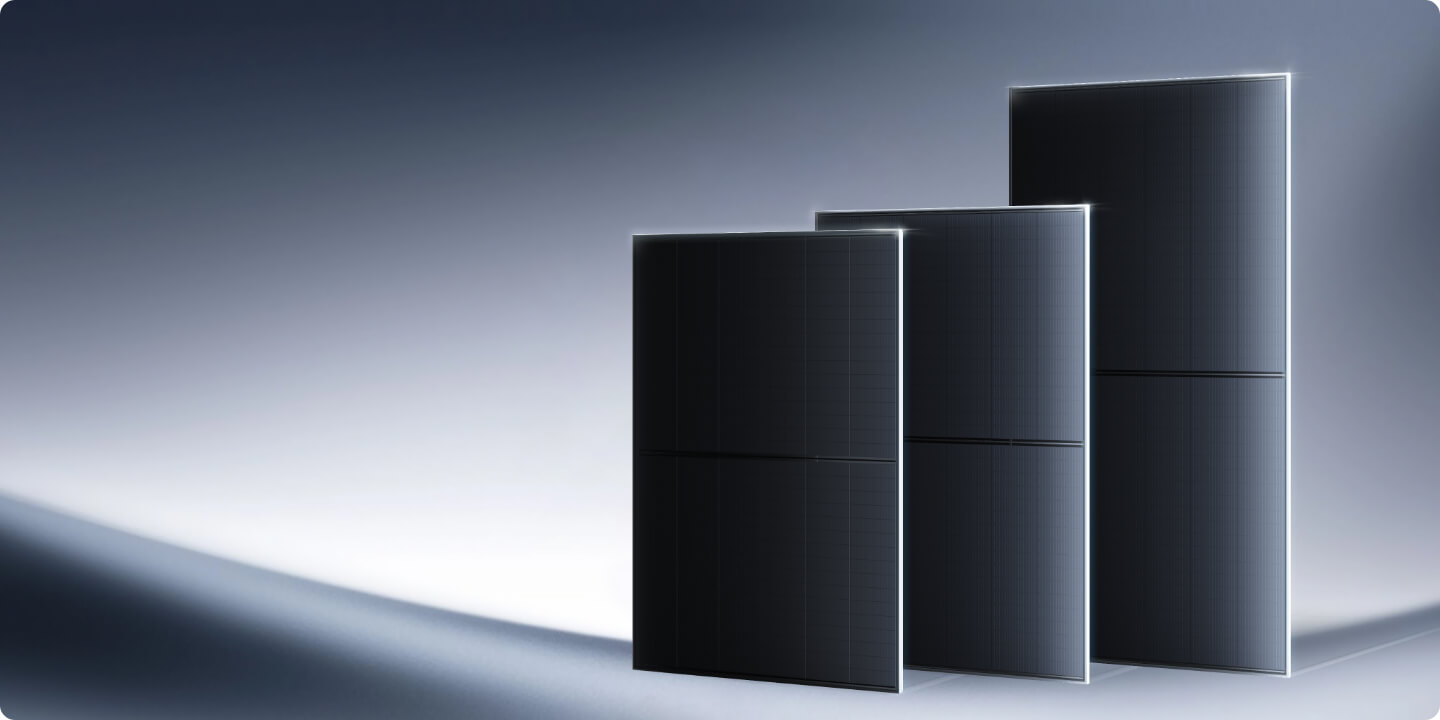
High-Efficiency Power Generation
Designed for high efficiency and high power output, this system enhances power generation capacity per unit area and is suitable for large-scale photovoltaic over-configuration scenarios.
Efficient Utilization of Low-Light Resources
Excellent low-light power generation performance extends effective generation time and improves energy acquisition capabilities under complex climatic conditions.
Highly Reliable Operation
Adaptable to complex environments such as high temperatures and desert conditions, ensuring long-term, stable power generation.
Tiger Neo 3.0 PV Module
High-Efficiency Power Generation
Designed for high efficiency and high power output, this system enhances the park’s capacity to supply green electricity per unit area.
High-Efficiency Utilization of Low-Light Conditions
Improves power generation capacity during early mornings, evenings, and under low irradiance conditions, extending the effective power generation period.
Highly Reliable Operation
Adapted to long-term outdoor operating environments to ensure stable operation of the PV system.
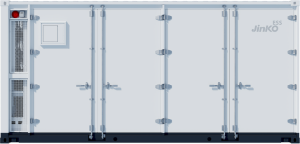
SunTera Energy Storage System
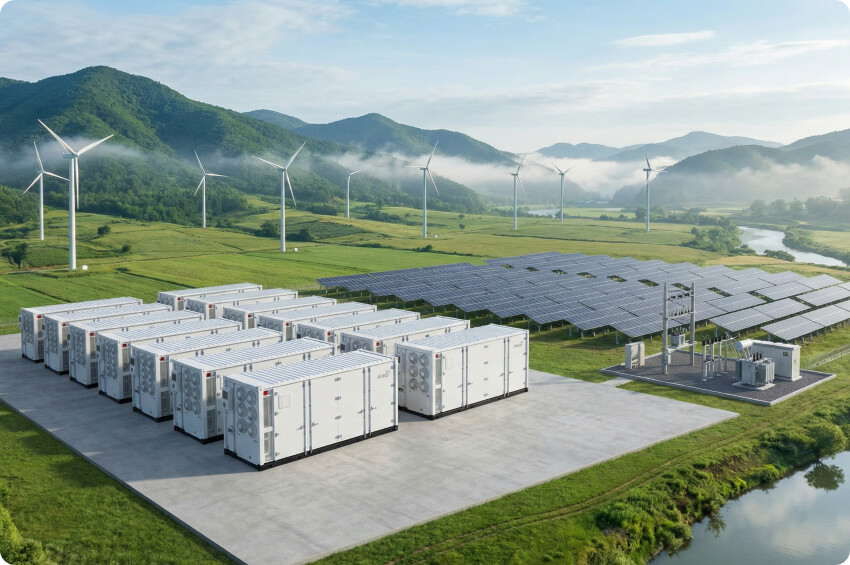
Grid-forming and Black Star
Supports grid-forming operation, black start, and microgrid operation, suitable for weak grid and off-grid power supply scenarios.
High Safety and Reliability
A five-layer safety protection system and long-life design ensure the long-term stable operation of long-duration energy storage systems.
High Integration and Rapid Deployment
The system is highly integrated and factory-prefabricated, reducing on-site installation and commissioning work and shortening the project construction cycle.
Smart O&M
Supports remote monitoring, condition diagnostics, and predictive maintenance to improve the operational and maintenance efficiency of large-scale energy storage systems.
SunTera Energy Storage System
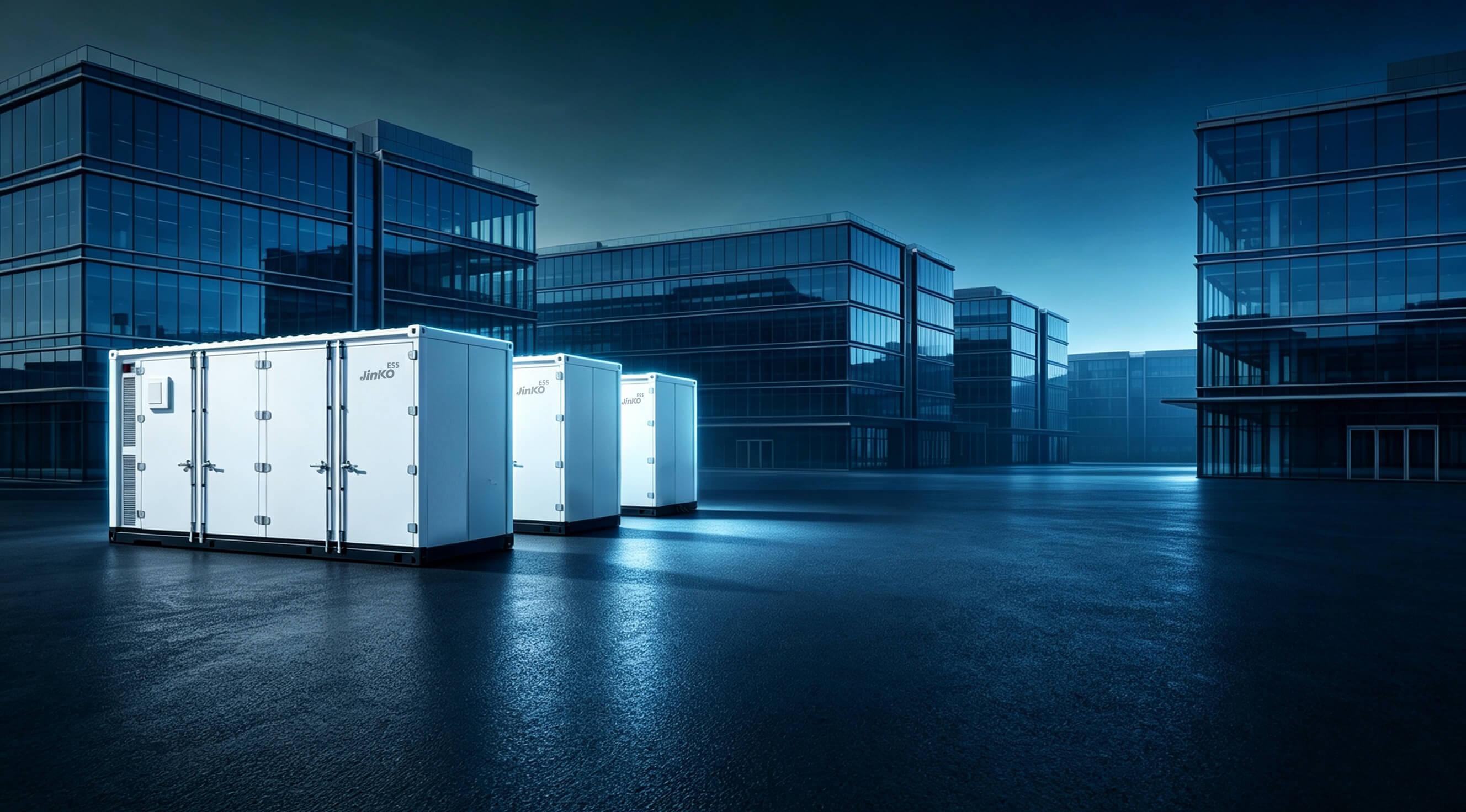
Rapid Response and Grid-Supporting Capabilities
Supports grid-supporting operation, providing power support to critical loads during grid anomalies.
Highly Reliable Backup Power
Supports black start and microgrid operation capabilities, enhancing the resilience of emergency power supply for data centers.
High-Safety Design
A five-layer safety protection system enhances the safety of the energy storage system throughout its entire lifecycle.
High Integration and Rapid Deployment
The system is highly integrated and factory-prefabricated, reducing on-site installation and commissioning work and shortening the project construction cycle.
Smart O&M
Supports remote monitoring, condition diagnostics, and predictive maintenance, reducing on-site O&M workload.
System Operation Logic

Daytime

Nighttime
The 4.5 GWp PV system prioritizes supplying power to the AIDC’s 1 GW continuous load.
The remaining approximately 3.5 GW of available photovoltaic power is used to charge the energy storage system via the PCS. Based on an energy storage capacity of 19 GWh, the theoretical charging time is approximately 5.4 hours;
When PV output is insufficient or generation ceases, the energy storage system supplies power to the AIDC’s continuous load at a rate of approximately 1 GW.
The 19 GWh of energy storage capacity can theoretically sustain this for about 19 hours.

Solar power is prioritized to meet load demand

Excess green electricity is stored in the energy storage system

The energy storage system provides power during nighttime and periods of low irradiance

Reduces reliance on the external grid and enables RTC operation
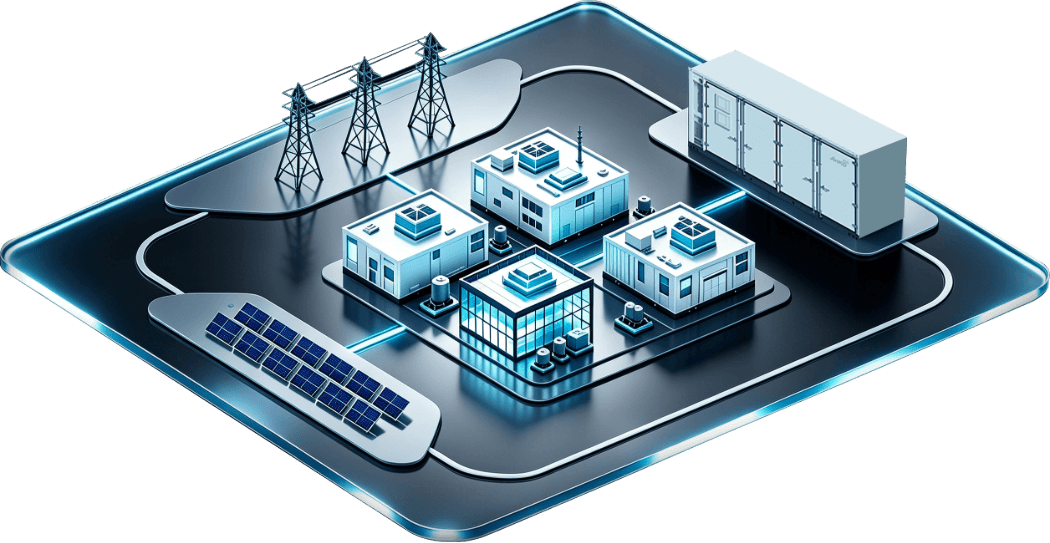
System Operation Logic

Normal

Grid Failure
The PV system prioritizes supplying power to the AIDC, while the energy storage system is charged by the utility grid and remains in standby mode, not participating in daily energy dispatch;
In the event of a utility power failure, the data center’s UPS performs a millisecond-level power supply switchover; the energy storage PCS rapidly switches to grid-forming mode and gradually assumes power supply for critical loads; the diesel generator (if configured) starts up and takes over emergency power supply duties. Once the utility grid is restored, the utility grid resumes its role in providing long-term power supply.

PV continuously reduces electricity costs

Energy storage provides emergency backup capacity

Improves power supply reliability and grid resilience

Meets the data center’s high-reliability operational requirements
Revenue Projections
| Category | Item | Data | Notes |
|---|---|---|---|
| Electricity Demand | AIDC Continuous Load | 1GW | Assumes continuous operation throughout the year |
| Annual Electricity Consumption | Annual Electricity Consumption | 8.76 billion kWh | 1GW×8760h |
| Electricity Rate Reference | C&I Electricity Rate 0.70 RMB/kWh | 0.70 RMB/kWh | Calculated based on typical overseas electricity rates |
| Electricity Expenses | Annual Electricity Costs | Approx. 6.1 billion RMB/year | 8.76 billion kWh × 0.70 yuan/kWh |
| Project Value | Substituted Electricity Costs | Approx. 6.1 billion RMB/year | Theoretical substituted electricity osts under the RTC model |
Note: This section only presents the annual electricity purchase costs that can be substituted under the RTC model; it does not include calculations related to project investment, IRR, or payback period.
Revenue Projections
| Category | Item | Data | Notes |
|---|---|---|---|
| Electricity Demand | AIDC Continuous Load | 10MWp | Typical Configuration |
| Annual Electricity Consumption | Annual Electricity Consumption | 11–13 million kWh | Based on 1,100–1,300 hours |
| Electricity Rate Reference | C&I Electricity Rate 0.70 RMB/kWh | 0.70–0.80 yuan/kWh | Typical domestic commercial and industrial electricity tariffs |
| Save on electricity bills | Holiday electricity revenue | 7.7–10.4 million yuan per year | Photovoltaic power generation replacing purchased electricity |
| The value of energy storage | Emergency backup power | / | Economic benefits are not calculated separately |
Note: In the domestic scenario, the energy storage system primarily serves as an emergency backup power source; therefore, only the electricity savings generated by photovoltaic power generation are calculated, and the benefits of energy storage are not calculated separately
Featured Products